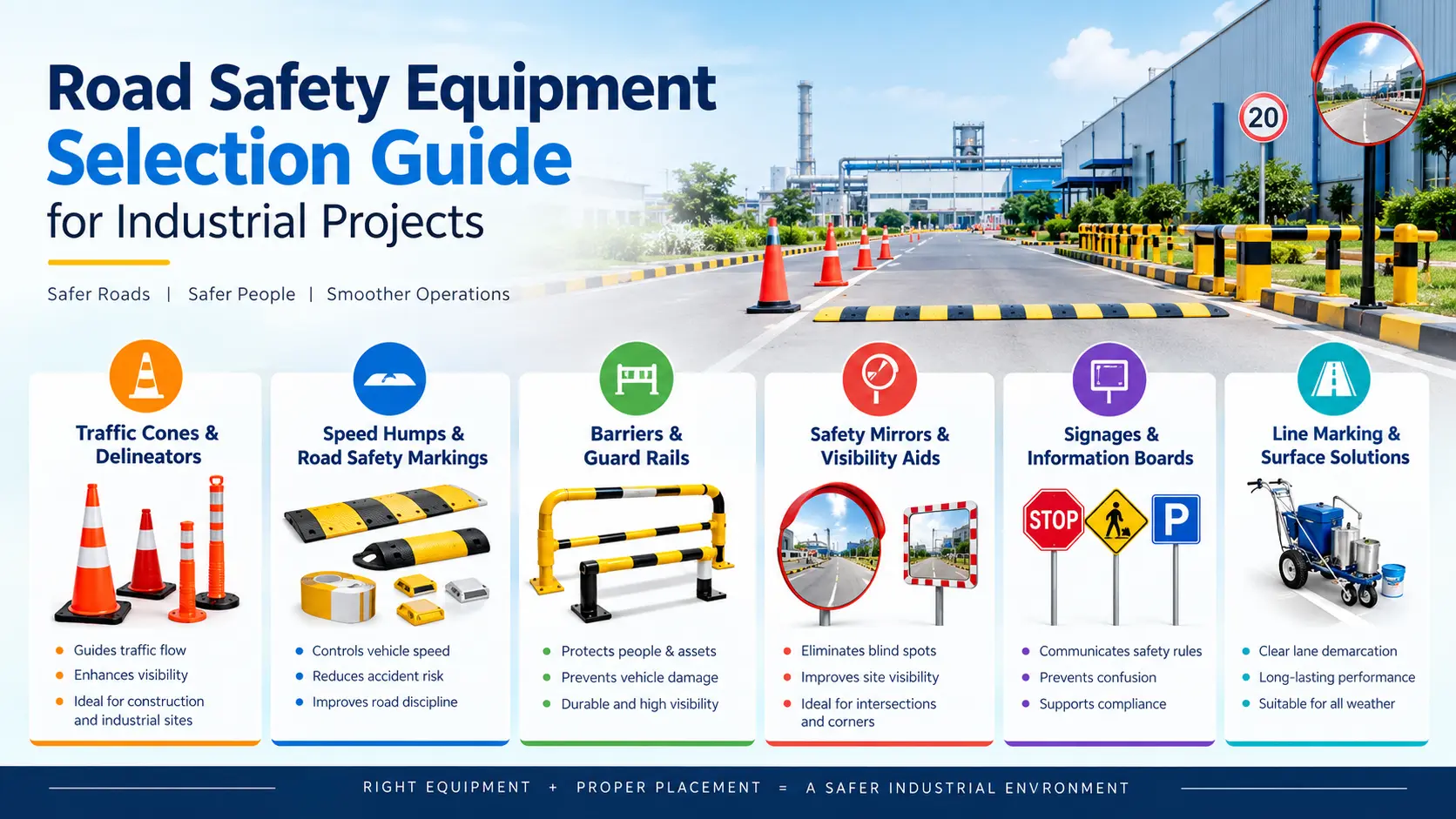
A busy factory entrance, a warehouse loading area, or a construction site can become hazardous when vehicle movement isn't properly managed. Poor visibility, unclear traffic routes, and inadequate barriers can increase the risk of collisions, injuries, and costly operational disruptions.
Choosing the right road safety equipment isn't simply about buying cones and signboards. It requires understanding vehicle movement, site conditions, pedestrian access and the level of protection each area needs.
For industrial facilities, logistics companies, contractors, and infrastructure developers, this guide explains how to select practical road and traffic safety products for projects across India.
Why Road Safety Equipment Matters in Industrial Projects
Industrial sites often have forklifts, trucks, cars, delivery vehicles, and pedestrians sharing limited space. Without clearly defined traffic routes, even routine movements can create avoidable risks.
Effective road safety planning helps organizations
➤ Separate pedestrian walkways from vehicle routes.
➤ Improve visibility at entrances, intersections, and blind spots.
➤ Control vehicle speeds in parking areas and internal roads.
➤ Identify restricted areas and hazardous zones.
➤ Support safer loading, unloading, and reversing operations.
➤ Maintain orderly traffic movement during construction and maintenance.
The International Labour Organization identifies workplace safety as an important part of preventing occupational injuries and protecting workers. For industrial projects, equipment selection should therefore form part of a wider site risk assessment rather than being treated as a standalone purchase.
Essential Road Safety Products and Their Applications
Different products address different hazards. Selecting equipment according to its intended use is more effective than purchasing a standard package for every site.
Traffic Cones and Rubber Speed Breakers
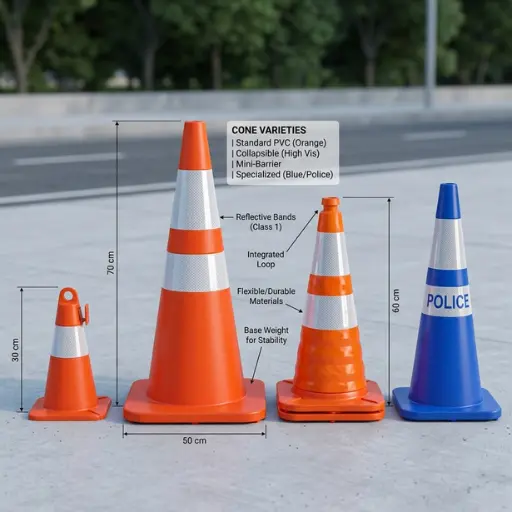
Traffic cones help mark temporary work zones, divert vehicles and guide traffic during maintenance or construction. Choose suitable heights, stable bases and reflective features according to visibility, vehicle speeds and operating conditions.
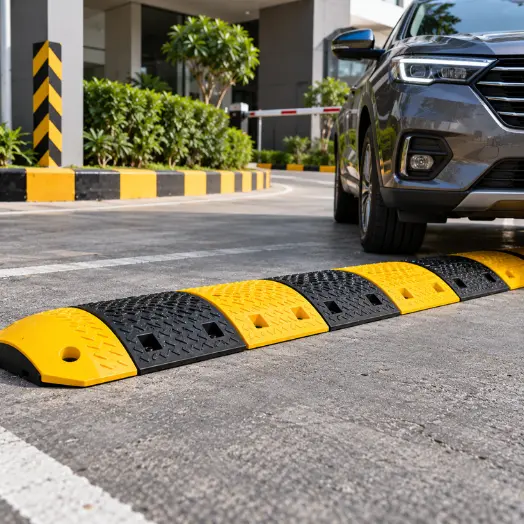
Rubber speed breakers can help manage vehicle speeds in appropriate low-speed areas, such as factory entrances, parking facilities and internal access roads. Confirm vehicle compatibility, mounting requirements and the suitability of the installation location before specifying them.
Road Studs and Reflective Road Markings
Road studs improve route visibility by providing visual guidance along road edges, curves and lane boundaries. Solar road studs may be useful in locations where active illumination is required, while reflective road studs provide visibility through reflected vehicle headlights.
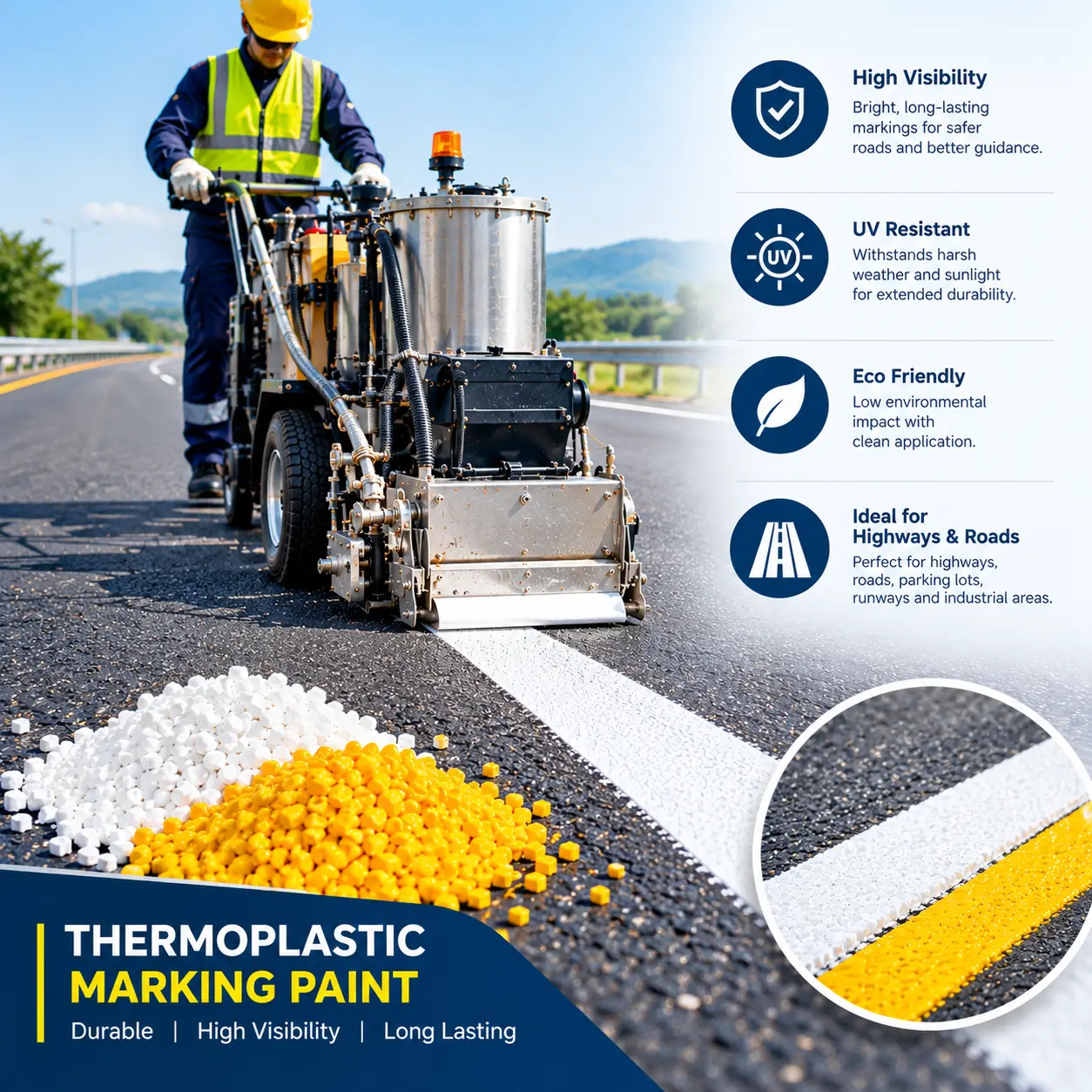
Thermoplastic road marking paint is commonly used for lane markings, directional arrows, pedestrian crossings and parking layouts. The correct specification depends on the surface condition, traffic load, application method and applicable project requirements.
Road Safety Barriers and Crash Barriers
Barriers serve different purposes, and they shouldn't be treated as interchangeable.
➤ Traffic barriers: Help channel or restrict vehicle movement.
➤ Crash barriers: Designed to contain or redirect vehicles when properly engineered and installed as part of an appropriate road restraint system.
➤ Flexible bollards: Help define restricted areas and guide vehicle movement.
➤ Water-filled barriers: Can provide temporary separation where suitable for the application.
For highways and other high-speed environments, select crash barriers based on the required containment performance, installation conditions, and applicable road authority specifications. Ordinary plastic barriers aren't substitutes for engineered crash protection.
Reflective Road Signs and Traffic Signs
Signs communicate speed limits, warnings, directions, restrictions, and mandatory actions. Select the appropriate sign type, size, reflective properties, and mounting arrangement based on approach speed, viewing distance, lighting, and applicable standards.
Keep signs unobstructed and position them where drivers have enough time to recognize and respond to the message.
How to Select Equipment for Your Project
Before contacting a road safety products supplier, assess the actual site requirements.
Step 1: Identify Traffic and Pedestrian Risks
Inspect entrances, internal roads, loading bays, intersections, parking zones, and pedestrian crossings. Record vehicle types, movement patterns, blind spots, and areas with frequent reversing.
Step 2: Match Products to the Application
Consider the following requirements:
➤ Factories: Vehicle segregation, pedestrian crossings, speed control and warning signs.
➤ Warehouses: Forklift routes, loading bay protection, rack-end protection and floor markings.
➤ Construction sites: Temporary traffic control, cones, barricades and warning signs.
➤ Highways: Approved traffic signs, road studs, markings and appropriately engineered restraint systems.
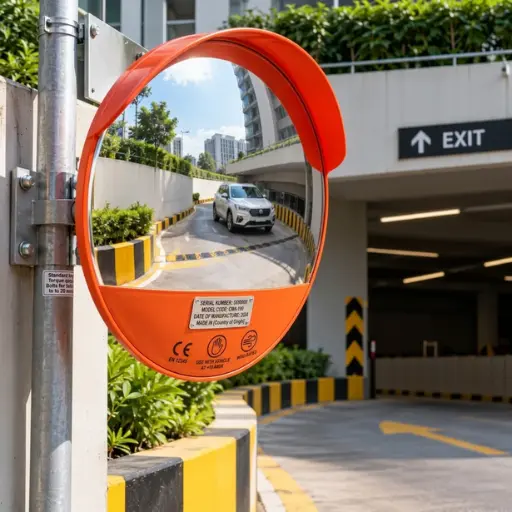
➤ Commercial buildings: Parking guidance, bollards, convex mirrors and pedestrian safety measures.
Step 3: Verify Specifications and Compliance
Ask suppliers for product dimensions, materials, reflectivity, performance data, and installation instructions where applicable. Check relevant BIS, IRC, MoRTH, or other project-specific requirements rather than assuming one standard applies to every product.
Step 4: Plan Installation and Maintenance
Consider surface preparation, fixing methods, drainage, weather exposure, traffic loads, and replacement access. Include inspection and maintenance requirements in the project plan.
Step 5: Prepare a Bill of Quantities
A clear BOQ should identify product types, specifications, quantities, delivery locations, installation requirements, and target completion dates. This makes quotations easier to compare and helps reduce procurement delays.
Common Procurement Mistakes to Avoid
Even suitable products can underperform when they're specified incorrectly. Avoid these common mistakes:
➤ Choosing products based only on the lowest price.
➤ Installing speed breakers without assessing vehicle type and site conditions.
➤ Treating temporary traffic barriers as crash protection systems.
➤ Selecting reflective products without considering nighttime visibility.
➤ Ignoring fixing methods and surface compatibility.
➤ Buying quantities before mapping the site layout.
➤ Failing to establish inspection and replacement procedures.
A good procurement decision balances suitability, durability, installation requirements, and long-term operating costs.
Road Safety Equipment Sourcing in India
Finding a suitable road safety equipment supplier in India means looking beyond the product catalogue. Buyers should evaluate specification support, product availability, documentation, delivery capability and installation services.
Bluelotus Infrasafety supports B2B safety equipment requirements for industrial facilities, warehouses, logistics operations, construction contractors and infrastructure projects. Its road and traffic safety range includes products such as traffic cones, speed breakers, road studs, barriers and reflective traffic signs, subject to product availability and project specifications.
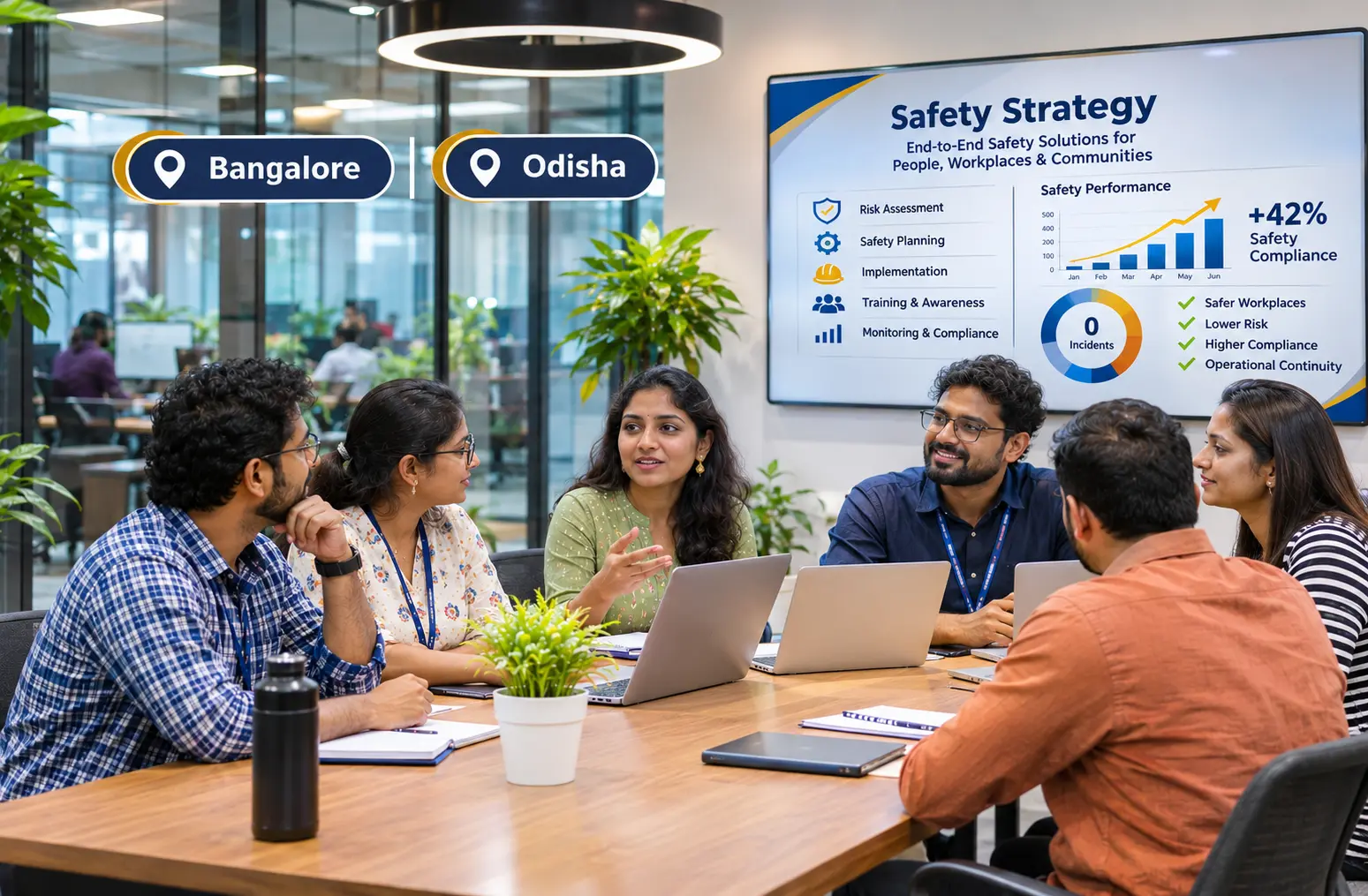
For buyers seeking a road safety supplier in Odisha or Bengaluru, India, the practical next step is to share the project location, product requirements, and quantities for confirmation of supply and installation coverage.
Before placing an order, request a quotation that clearly identifies the specified products, quantities, delivery terms, and any installation services included.
Frequently Asked Questions
Which road safety equipment is essential for an industrial site?
Typical requirements include traffic cones, speed-control devices, traffic signs, pedestrian markings, bollards and suitable barriers. The final selection depends on the site risk assessment, vehicle movement and applicable requirements.
How do I choose between road studs and thermoplastic road markings?
Road studs provide visible guidance through raised reflective or illuminated markers. Thermoplastic markings create continuous lines, symbols and directional markings. Many projects use both where appropriate.
Are traffic barriers and crash barriers the same?
No. Traffic barriers primarily guide or restrict movement, while crash barriers are engineered to contain or redirect vehicles under specified impact conditions. Always verify the intended performance.
What should I include when requesting a bulk quotation?
Share product specifications, quantities, site location, delivery schedule, installation requirements and relevant project standards. A BOQ and site layout can help the supplier prepare a more accurate proposal.
How can I find a road safety equipment supplier in Odisha or Bengaluru?
Shortlist suppliers with relevant product experience, verifiable documentation, and confirmed delivery or installation coverage for your location. Compare quotations against the same technical specifications.
Choose Road Safety Equipment Based on Risk, Not Guesswork
The right road safety equipment starts with understanding how vehicles and pedestrians move through your site. Assess the risks, specify the correct products, verify applicable requirements, and plan installation before finalizing procurement.
For your next industrial or infrastructure project, prepare a BOQ covering traffic cones, road studs, markings, signs, and barriers as required. Share the specifications, quantities, and delivery location with Bluelotus Infrasafety to discuss suitable products and request a project quotation.
📞 +91 93377 45396 / +91 91487 36860 / +91 74833 94208
📧 info@bluelotusinfrasafety.com
🌐 https://www.bluelotusinfrasafety.com/
Comments
No comments yet. Be the first to share a question or site experience.