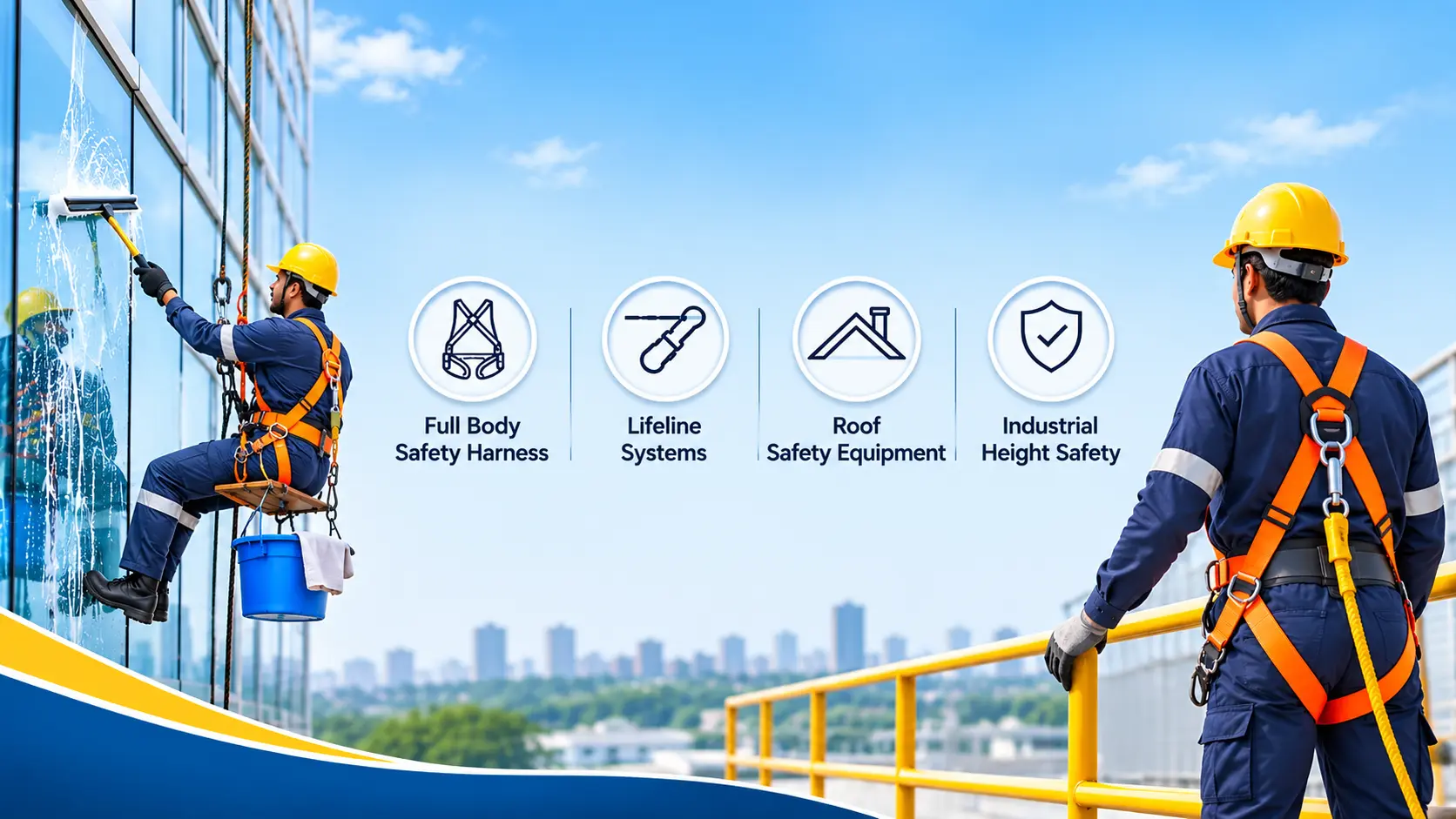
Working at height is part of everyday operations across construction sites, manufacturing plants, warehouses & industrial facilities. From repairing rooftop machinery to installing electrical systems, workers regularly face situations where a single misstep can result in a serious injury.
The challenge isn't simply providing workers with a safety harness. They need the right combination of equipment, secure anchorage, proper training & a practical rescue plan.
According to the International Labour Organization (ILO), falls from height remain a major occupational safety concern across industries. This makes investing in reliable fall protection systems an essential part of workplace risk management.
In this guide, we'll explore the different types of fall protection equipment, how to select the right products & the industrial height safety requirements businesses should consider in India.
Understanding Fall Protection and Why It Matters
Fall protection refers to the equipment, procedures and safety measures used to prevent workers from falling or minimise injuries if a fall occurs.
It's particularly important in environments where employees work on elevated platforms, roofs, ladders, scaffolding and industrial structures.
Common workplace situations requiring fall protection include:
● Construction and building maintenance.
● Warehouse rack installation and inspection.
● Rooftop solar panel installation.
● Electrical and telecom maintenance.
● Industrial machinery servicing.
● Painting and façade maintenance.
● Loading dock and elevated platform operations.
An effective safety programme should prioritise eliminating work at height wherever reasonably possible. When that's not practical, collective protection such as guardrails and working platforms should come before personal fall arrest equipment.
This hierarchy helps businesses reduce risks rather than relying entirely on individual protective equipment.
Essential Fall Protection Equipment for Industrial Work
Choosing the right equipment depends on the working environment, fall hazards and nature of the task. Here are the essential components every industrial safety team should understand.
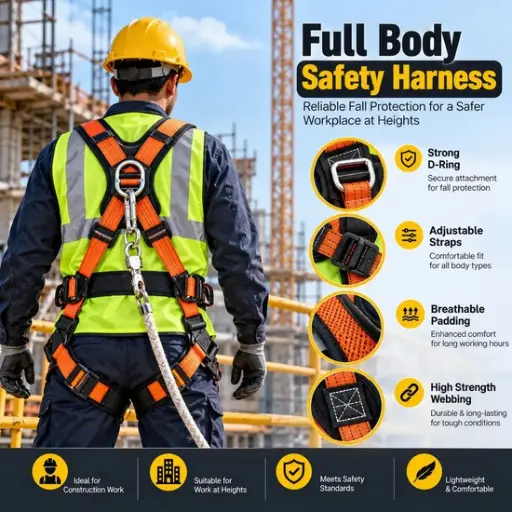
Full Body Safety Harness
A full body safety harness is one of the most important components of a personal fall arrest system. It distributes arrest forces across appropriate parts of the body when connected to a compatible fall protection system.
A suitable harness should include:
● Adjustable shoulder and leg straps.
● Secure buckles and fastening points.
● A designated dorsal attachment point.
● Appropriate material strength and construction.
● Compatibility with lanyards and connecting equipment.
● Manufacturer identification and inspection information.
Practical tip: Check the harness before every use. Look for damaged stitching, cuts, chemical exposure, corrosion, deformed buckles and missing labels. Remove defective equipment from service.
Lifeline Systems for Work at Height
Lifeline systems provide a secure connection between workers and suitable anchorage arrangements. They're particularly useful when employees need to move along elevated work areas.
The main types include:
● Vertical lifelines: Used for climbing activities involving ladders, towers and other vertical structures.
● Horizontal lifelines: Allow movement along roof edges, industrial structures and elevated platforms.
● Retractable lifelines: Automatically extend and retract while limiting fall distance when properly selected and installed.
Lifeline selection requires attention to anchor strength, system compatibility, clearance requirements and manufacturer specifications. Horizontal lifelines, in particular, need proper engineering because loads can increase significantly during a fall.
Roof Safety Equipment
Roof work presents additional hazards, especially when surfaces are fragile, slippery or exposed to changing weather conditions.
Essential roof safety equipment includes:
● Roof anchor points.
● Horizontal lifeline systems.
● Roof walkways and crawling boards.
● Guardrails and edge protection.
● Safety nets.
● Suitable full-body harnesses.
● Fall restraint and fall arrest systems.
For industrial buildings and warehouses, permanent roof safety systems can make routine maintenance considerably safer.
Safety Lanyards and Anchorage Connectors
Lanyards connect a worker's harness to an anchorage or lifeline system. Energy-absorbing lanyards help reduce the forces transmitted during a fall.
Always consider the required fall clearance, connector compatibility and anchor positioning before selecting a system.
How to Choose the Right Safety Harness and Lifeline System
Buying fall protection equipment based only on price can create unnecessary risks. Businesses should evaluate equipment based on actual working conditions.
Consider these factors:
● Working height: Determine the distance between the worker and the lower level.
● Job requirements: Identify whether the task requires restraint, positioning or fall arrest.
● Movement requirements: Select vertical or horizontal lifelines according to worker movement.
● Anchorage: Ensure the anchor is suitable for the system and designed for the expected loads.
● Comfort and fit: Choose an adjustable harness suitable for the worker and task.
● Certification: Verify relevant product standards and manufacturer documentation.
● Inspection support: Establish inspection, maintenance and replacement procedures.
A properly selected system should work as a complete arrangement. A certified harness alone doesn't guarantee safety if the anchor, connector or lifeline is unsuitable.
Industrial Height Safety Requirements in India
Industrial height safety requirements involve more than distributing personal protective equipment. Employers must assess hazards, provide suitable protection and ensure workers understand safe operating procedures.
Section 32(c) of India's Factories Act, 1948, addresses protection for people working at heights through fencing or other reasonably practicable safety measures.
The Ministry of Labour and Employment's Occupational Safety, Health and Working Conditions Central Rules, 2026, also address working at height under Rule 124, including protective arrangements for work involving potential falls exceeding 1.8 metres.
Businesses should verify the applicable central and state requirements for their specific workplace and industry.
Important safety practices include:
● Conduct a documented work-at-height risk assessment.
● Provide appropriate harnesses and protective equipment.
● Install suitable guardrails and anchorage systems.
● Train workers in equipment use and inspection.
● Implement work permits where required.
● Maintain inspection and maintenance records.
● Establish emergency rescue arrangements.
International references such as EN 361 for full body harnesses and EN 795 for anchor devices can also help procurement teams evaluate suitable products. Always verify the applicable product certification and system requirements.
Common Mistakes to Avoid When Working at Height
Even good-quality equipment can fail to protect workers when it's used incorrectly.
Watch out for these common mistakes:
● Using a damaged or incorrectly fitted harness.
● Connecting equipment to an unsuitable anchor point.
● Ignoring fall clearance calculations.
● Using incompatible connectors and lanyards.
● Working near fragile roof surfaces without protection.
● Skipping pre-use equipment inspections.
● Allowing untrained employees to work at height.
● Having no practical rescue plan after a fall.
Remember, a worker suspended in a harness after a fall needs prompt rescue. A fall arrest system must always be supported by a realistic emergency response procedure.
Frequently Asked Questions About Fall Protection Equipment
Why is a full body safety harness important?
A full body safety harness helps distribute fall arrest forces across designated areas of the body when connected to a compatible fall arrest system. Correct fitting and anchorage are essential.
Which lifeline system is suitable for rooftop work?
Horizontal lifelines are commonly used where workers need to move along rooftops. The correct arrangement depends on roof structure, anchorage design, clearance and the manufacturer's specifications.
How often should fall protection equipment be inspected?
Workers should conduct pre-use checks before every use. A competent person should also carry out detailed inspections at intervals determined by applicable standards, manufacturer instructions and workplace conditions.
Is roof safety equipment necessary for warehouse maintenance?
Yes. Warehouse roof maintenance can involve fragile sheets, unprotected edges and slippery surfaces. Appropriate edge protection, roof walkways, anchor points and personal fall protection should be selected through a risk assessment.
What should businesses check before purchasing fall protection equipment?
Check product certification, intended application, load compatibility, anchorage requirements, material quality, inspection instructions and supplier support.
Protect Your Workforce with the Right Fall Protection Solutions
Workplace safety starts with identifying hazards before an accident happens. The right combination of full body safety harnesses, lifeline systems, roof safety equipment and properly engineered anchorage can make working at height significantly safer.
For businesses looking for dependable industrial safety equipment in India, BlueLotus Infrasafety offers safety equipment and solutions designed to support industrial, construction and infrastructure safety requirements.
Explore our safety equipment and solutions or connect with our team to discuss your requirements for bulk supply and installation support.

Comments
No comments yet. Be the first to share a question or site experience.