Buying personal protective equipment (PPE) isn't just another procurement task. A poorly selected helmet, unsuitable respirator or incorrect safety harness can leave workers exposed to serious workplace hazards. For contractors, factory owners and procurement managers, choosing the right equipment means balancing worker safety, product quality, compliance and budget.
According to the International Labour Organization (ILO), nearly 3 million people die annually due to work-related accidents and diseases. This highlights why workplace protection needs to be a priority rather than an afterthought.
This industrial safety equipment buying guide explains what PPE workers need, which standards buyers should check and how businesses can select suitable safety equipment in 2026.
Essential PPE Equipment for Industrial Workers
Not every worker needs the same protective equipment. A warehouse operator, construction contractor and chemical plant worker face different risks. Start by identifying workplace hazards before selecting equipment.
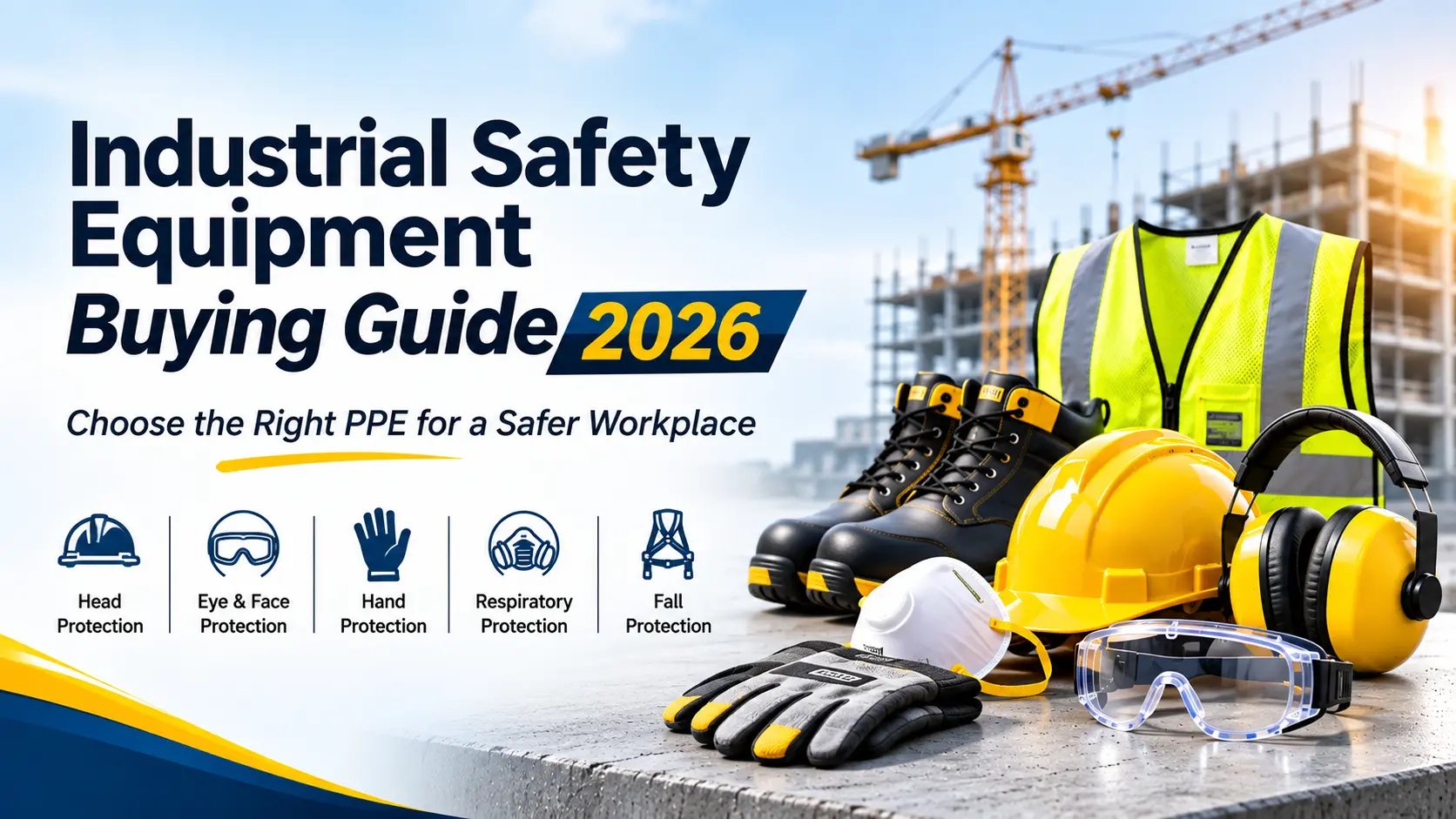
The essential industrial PPE equipment list includes:
● Head protection: Industrial safety helmets protect against falling objects and workplace impacts.
● Eye and face protection: Safety goggles, face shields and protective spectacles help prevent injuries from dust, flying particles and chemical splashes.
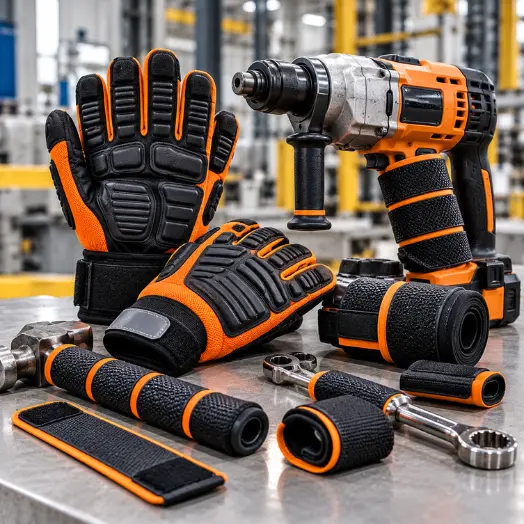
● Hand protection: Cut-resistant, chemical-resistant and anti-vibration gloves protect according to job requirements.
● Foot protection: Steel-toe or composite-toe safety shoes help protect against impact, punctures and workplace hazards.
● Hearing protection: Earplugs and earmuffs reduce exposure to hazardous workplace noise.
● High-visibility clothing: Reflective jackets improve worker visibility around vehicles, construction machinery and warehouses.
● Respiratory protection: Suitable respirators help protect against airborne particles, gases and vapours.
The important thing is to match each product to the actual workplace hazard instead of purchasing a standard PPE kit for every employee.
How to Choose Respiratory Protection Equipment
Respiratory protection is particularly important in manufacturing, construction, welding, painting and chemical-handling environments.
However, a common purchasing mistake is assuming that every mask provides the same protection.
Here are the main options:
● N95 filtering facepieces: Designed to filter at least 95% of specified airborne particles under applicable certification conditions.
● Half-face respirators: Cover the nose and mouth and can use suitable particulate filters or gas and vapour cartridges.
● Full-face respirators: Provide respiratory protection along with eye and face coverage.
● Powered air-purifying respirators (PAPRs): Use a powered blower to deliver filtered air through a compatible breathing interface.
Before purchasing, check:
● The type of contaminant and its concentration.
● Whether particulate filters or gas/vapour cartridges are required.
● The applicable BIS or other relevant certification.
● Fit testing and compatibility with other PPE.
● Manufacturer instructions and replacement schedules.
For Indian buyers, relevant standards include IS 9473 for filtering half masks, IS 14746 for half and quarter masks, and IS 14166 for full-face masks. Always verify the applicable edition and current certification requirements.
Fall Protection PPE Checklist for Construction Sites
Working at height creates serious risks for construction workers, maintenance technicians and industrial contractors.
A suitable fall protection system must be selected according to the work environment and fall hazards.
Essential equipment includes:
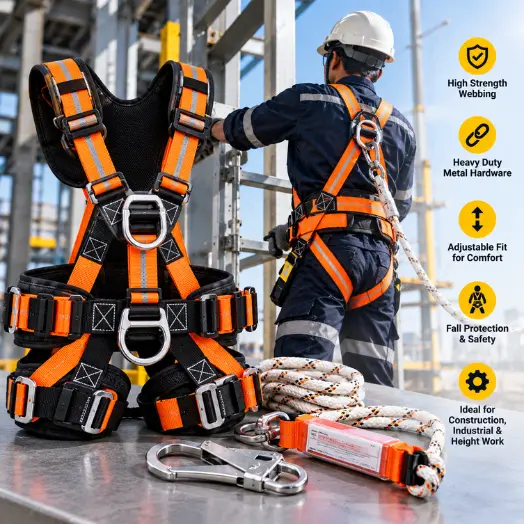
● Full-body safety harness: Distributes forces across the body during a fall arrest.
● Shock-absorbing lanyard: Helps reduce impact forces during a fall.
● Lifeline systems: Provide suitable attachment arrangements for workers moving at height.
● Anchorage connectors: Connect the fall protection system to an appropriate anchorage point.
● Self-retracting lifelines: Automatically extend and retract while providing fall arrest functionality when correctly selected.
● Connectors and hooks: Provide compatible connections between system components.
Inspect equipment before every use. Check webbing, stitching, buckles, connectors and signs of damage. Equipment involved in a fall must be removed from service pending competent assessment.
Remember that PPE is only one part of fall prevention. Proper anchorage, training, rescue planning and suitable work procedures are equally important.
How to Select the Right Industrial Safety Equipment
Choosing suitable construction worker safety equipment requires more than comparing prices.
Follow these practical steps:
● Understand workplace hazards: Identify exposure to chemicals, dust, noise, sharp objects, falling materials and working-at-height risks.
● Check applicable standards: Verify product markings, certification, test documentation and manufacturer specifications.
● Prioritise fit and comfort: Poorly fitting PPE often gets used incorrectly or removed during work.
● Compare product quality: Examine material strength, durability, maintenance requirements and expected service life.
● Evaluate suppliers: Look for reliable industrial PPE suppliers in India that can support bulk orders, product documentation and consistent delivery.
A reliable supplier should help procurement teams select equipment based on application rather than simply recommending the most expensive product.
Industrial PPE Procurement Checklist
Before finalising a bulk purchase, procurement managers should verify:
● Workplace hazard assessment is completed.
● Required PPE categories are identified.
● Product specifications match the application.
● Applicable Indian safety standards are checked.
● Certification and technical documents are available.
● Worker sizes and fitting requirements are considered.
● Replacement and maintenance requirements are understood.
● Supplier delivery capacity and bulk availability are confirmed.
This simple industrial safety equipment procurement checklist can help businesses avoid unnecessary purchases and improve workplace protection.
Frequently Asked Questions
Which respiratory protection gear meets current safety standards in India in 2026?
Respiratory protection options include filtering facepieces, half-face respirators and full-face respirators. Buyers should verify applicable BIS standards, certification, filter compatibility and suitability for the workplace contaminant before purchasing.
What safety gear does a professional contractor need every day?
Professional contractors generally need safety helmets, protective gloves, safety shoes, safety goggles, reflective jackets and task-specific respiratory and hearing protection. Additional fall protection equipment is necessary when working at height.
What should be included in a fall protection PPE checklist for construction sites?
A checklist should include a full-body safety harness, compatible lanyard, anchorage connectors, lifeline systems, self-retracting lifelines and suitable connectors. All equipment should be inspected before use.
How do I choose the right industrial safety equipment for workers?
Start with a workplace hazard assessment, identify the required protection level, check applicable standards and certifications, evaluate comfort and durability, and select PPE suitable for each worker's job responsibilities.
What should businesses check before buying industrial safety equipment in India?
Businesses should check applicable BIS standards, certification documents, product specifications, manufacturer reliability, bulk availability, product quality, replacement requirements and delivery timelines.
Conclusion: Make Workplace Safety a Procurement Priority
Choosing PPE shouldn't be about buying the cheapest equipment or ordering identical kits for every employee. It should start with understanding workplace hazards and selecting suitable protection for each task.
For contractors, factories and procurement managers, the next step is simple: review your current PPE inventory, identify missing protection categories and verify product specifications before placing your next bulk order.
At BlueLotus Infrasafety, businesses can explore industrial, construction, road safety and workplace protection products to support their safety procurement requirements.
Looking for industrial safety equipment for your business? Explore the BlueLotus Infrasafety product catalogue and connect with the team for your bulk procurement requirements.
📞 +91 93377 45396 | +91 91487 36860 | +91 74833 94208
📧 info@bluelotusinfrasafety.com
🌐 https://www.bluelotusinfrasafety.com/

Comments
No comments yet. Be the first to share a question or site experience.